

The Prescription That Changed Everything: A Conversation About Benzodiazepines, Dependency, and Hope
There are some conversations that hit different when you’ve lived through similar experiences. My recent interview with D E Foster on Lens of Hopefulness with John Passadino was one of those conversations where two people who’ve traveled similar difficult roads can speak the same language without having to explain everything.
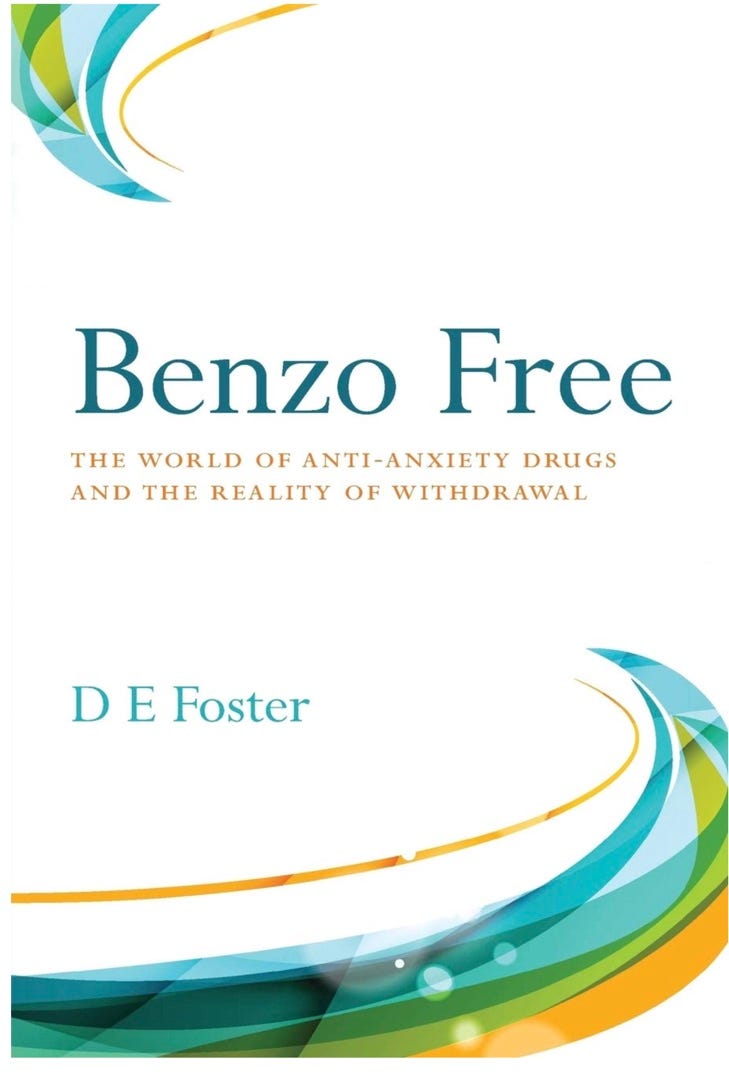
D (as everyone calls him) is a medical researcher and the author of “Benzo Free: The World of Anti-Anxiety Drugs and the Reality of Withdrawal.” But those credentials don’t tell you what you really need to know. What you need to know is this: D was prescribed clonazepam (Klonopin) by his doctor in 2002 and took it for 12 years without any warning about the risks. When he discovered he was dependent on it and tried to withdraw, it became “the hardest and most challenging experience” of his life—one he’s still dealing with today.
I know something about this journey because I’m on it myself.
When Anxiety Becomes Invisible
One of the first things D said that resonated with me was this: “One of the key problems with mental illness is its innate invisibility.”
And isn’t that the truth? You can’t see anxiety. You can’t take a blood test for panic disorder. There’s no X-ray that shows your fear. And because it’s invisible, people—including doctors—don’t always take it seriously enough. Or conversely, they may rush to prescribe medication without fully explaining what that medication does or the risks involved.
As D explained, anxiety becomes a real problem “when it becomes consistent, when it becomes chronic, and when it becomes something that affects our lives significantly.”
I felt that deeply. Because I’ve lived there—in that place where anxiety isn’t just occasional worry but a constant companion that makes it hard to function.
My Story Meets D’s Story
I admitted to D during our conversation that I’m a lifelong anxiety sufferer. I have what I jokingly call my collection of acronyms: GAD (General Anxiety Disorder), PD (Panic Disorder), HD (Hypochondriacal Disorder). I put the phobias as a cherry on top.
“They’re special,” D said, and we both had to laugh. Because sometimes you have to laugh at the absurdity of it all, even though it’s incredibly intense.
I told D about my own medication journey—how I resisted taking anything for the longest time. I kept telling my psychiatrist, “No, no, no. I don’t want to take anything. I don’t want to get addicted.” Then a neurologist finally said to me, “You need to be on medication.”
That was decades ago. And here’s what I want to be clear about: I actually needed something at the time. The panic attacks were overwhelming. I would get them at work, at family gatherings—anywhere really. You feel like you’re dying. It’s incredibly intense.
But here’s the thing that D’s story highlights so powerfully: I can’t say I was fully aware about what I was being prescribed.
The Prescription Without Warning
D’s experience is even more striking. He wasn’t even given Klonopin for anxiety initially—it was prescribed for stomach distress.
“I was never diagnosed with an anxiety condition,” he told me. “I finally went to a GP around 2002 who decided to try me on clonazepam, which is generic for Klonopin.”
He started at one milligram, eventually worked his way up to two, and took it for 12 years “not even thinking there was any problem with it.”
“It’s just a drug my doctor told me to take, so I kept taking it,” he said. “I think it helped me a little bit, but it wasn’t dramatic.”
Then tolerance set in. And when he discovered what had happened and tried to withdraw, his “whole world basically crashed down.”
In summary, per D: His doctor prescribed him a benzodiazepine for 12 years without warning him about dependency, tolerance, or the potential complications of withdrawal.
What We’re Not Being Told
This is where the conversation gets really important for anyone who has been prescribed a benzodiazepine or knows someone who has.
Benzodiazepines work on GABA receptors in the brain—they’re part of what D calls the “brakes” in our system that calm us down when glutamate (the “exciter”) gets us hyped up. They can be helpful in the short term. But long-term use changes your brain chemistry in ways that can create dependency.
And here’s the critical part: Many doctors may not be warning patients about these risks today, and that is why it is important to question, research, and assess alternatives.
D has spent over a decade researching benzodiazepines, withdrawal, and anxiety. He read and catalogued over one thousand articles, books, and videos on these subjects. He co-authored multiple research papers, including the 2023 study that introduced the term BIND—benzodiazepine-induced neurological dysfunction.
BIND describes the protracted state of neurological changes created by chronic exposure to benzodiazepines. These can include extreme anxiety, depression, cognitive dysfunction, memory loss, insomnia, tremors, and many other symptoms. And for some people, these symptoms can persist long after they stop taking the medication.
Research Your Medications—Please
If there’s one message I want to emphasize from this conversation, it’s this: Research your prescribed drugs carefully.
D and I both wish we had known more before we started these medications. Not that we necessarily wouldn’t have taken them—sometimes you need help, and medication can be part of that help. But we deserved to know the full picture.
Ask your doctor:
What are the risks of long-term use?
How does this medication work in my brain?
What is the process for stopping this medication if I need to?
Are there alternatives I should consider first?
What are the signs of dependence or tolerance?
Don’t just take a prescription and assume everything will be fine. Do your homework. Read the research. And if your doctor dismisses your concerns, find a doctor who will take them seriously.
The Holistic Alternative Path
Here’s something else D and I discussed that’s crucial: there are holistic approaches to managing anxiety that many people may not be fully aware of.
I mentioned during our conversation that today there are more holistic approaches than when I first started treatment decades ago. D has dedicated much of his work to helping people find healthier alternatives to long-term benzodiazepine use.
These approaches might include:
Mindfulness meditation and breathing techniques
Cognitive behavioral therapy (CBT)
Exposure therapy for specific phobias
Exercise and movement
Dietary changes
Sleep hygiene
Support groups and peer support
None of this is to say medication is never appropriate. But it should be one tool in a larger toolkit, not the only tool. And if medication is used, it should be with full informed consent and regular re-evaluation.
Expanding the Box
One concept D shared that really stuck with me is what he calls “expanding the box.”
When we’re going through extreme anxiety or withdrawal, we build a very tight box around ourselves. Some people D works with haven’t left their house in days. The work is to help them expand that box gradually.
“Sometimes it’s as little as take a step out of your house and sit on the front porch for five minutes,” he explained. “But then we build on it and we try to get them... to get back some normal life back into what’s going on.”
This is about exposure therapy—gently pushing ourselves to do things even when anxiety is there. Not recklessly, but carefully. Taking small steps. Acknowledging that yes, the fear is there, but that doesn’t mean we can’t move forward.
“Sometimes you have to push out a little bit and try something and realize, hey, that wasn’t as bad as I thought it might be,” D said.
I’ve experienced this myself. The agoraphobia I dealt with years ago didn’t go away because I stayed inside. It started to shift when I took those small steps outside my door. Literally. Just standing on the porch. Then walking to the mailbox. Then around the block.
Expanding the box. One small step at a time.
The Work That Matters
What struck me most about D is his dedication to helping others, even though—or perhaps because—he’s still dealing with the effects of BIND himself.
He’s been benzo-free since 2014, but he still has protracted symptoms. Yet he’s written a book, hosted over 200 podcast episodes (on the Benzo Free Podcast and Uneven Podcast), launched a support community called Uneven Life, co-authored multiple research papers, provided expert testimony, developed peer support training programs, and speaks nationally on these issues.
“I wouldn’t do it if I didn’t love it,” he told me. “There’s so many people that need help. And I know we’re making a difference, and that keeps you going when you know you’re making a difference.”
I understood this completely. Because as I told D, I’m doing Lens of Hopefulness for the same reason. It’s not about making millions. It’s about getting the message out. It’s about helping people.
When D runs his support groups and someone says “thank you,” he said, “all of a sudden, everything you do makes sense and it’s worth it.”
I know exactly what he means.
A Disclaimer We Both Need to Make
Near the end of our conversation, D and I had a mutual moment of recognition. We’re both people who have struggled with anxiety and medication issues. We’re both people doing advocacy work to help others. And we’re both careful not to tell people what to do with their medical care.
Neither of us are doctors. We can’t diagnose. We can’t prescribe. We can’t tell you to stop your medication.
What we can do is share our experiences. We can share the research. We can encourage you to ask questions, do your homework, and advocate for yourself. We can offer support and community. We can point you toward resources.
And we can tell you: you’re not alone in this.
The Community That Sustains Us
D has built an incredible community at Uneven Life—a peer-led support community focused on helping individuals who struggle with life, anxiety, and the complications of medication. It’s free. It’s accessible. And it’s run by people who understand what you’re going through because they’ve been there.
This kind of peer support is invaluable. Because when you’re in the depths of anxiety or withdrawal, knowing that someone else has walked this path and come out the other side can make all the difference.
Resources That Can Help
If D’s story resonates with you or if you’re dealing with benzodiazepine issues:
D E Foster’s Work:
Website: unevenlife.com (includes articles, videos, podcasts, and community support)
Book: “Benzo Free: The World of Anti-Anxiety Drugs and the Reality of Withdrawal” available on Amazon
YouTube: Search for “The Uneven Life” to find his podcasts and educational videos
Podcasts: Over 200 episodes of the Benzo Free Podcast and Uneven Podcast
Research D Has Co-Authored:
Multiple peer-reviewed papers on benzodiazepine use, withdrawal, and BIND
Part of research teams at the Alliance for Benzodiazepine Best Practices
Lived-experience panelist for the American Society of Addiction Medicine (ASAM) guidelines on benzodiazepine tapering
What I’m Taking With Me
This conversation reminded me why these honest, sometimes uncomfortable discussions matter. Mental health issues are invisible, yes. But that doesn’t make them any less real or any less deserving of proper care and attention.
If you’re struggling with anxiety, you deserve comprehensive information about your treatment options—all of them, not just medication. If you’ve been prescribed a benzodiazepine, you deserve to know the risks as well as the benefits. If you’re trying to withdraw from these medications, you deserve support and patience and understanding.
And if you’re a doctor reading this: please, please give your patients the full picture. Informed consent isn’t just a legal requirement—it’s an ethical one. Honestly though, this picture has changed dramatically from where it was many years ago. Doctor’s are less prone to prescribe drugs as they did and I’ve seen them write much shorter scripts. Similarly, drug stores offer reams of information, and with the internet/AI, we have research at our fingertips.
D and I came from different paths but ended up in similar places. We both know what it’s like to struggle with anxiety. We both know what it’s like to take medications that changed our brain chemistry in ways we weren’t prepared for. And we’re both committed to making sure others have access to the information and support we wish we’d had.
Listen to the Full Conversation
My complete interview with D E Foster goes deeper into his research, his withdrawal experience, the work he’s doing to help others, and the practical strategies for managing anxiety and expanding your world when fear tries to box you in.
Available on Lens of Hopefulness with John Passadino:
Substack
Apple Podcasts
Spotify
Audible
YouTube
The invisibility of mental illness doesn’t make it less real. The complexity of medication doesn’t excuse doctors from fully informing patients. And the difficulty of the journey doesn’t mean we have to walk it alone.
That’s what I learned from this conversation with D. And I hope it’s what you take with you too.


